

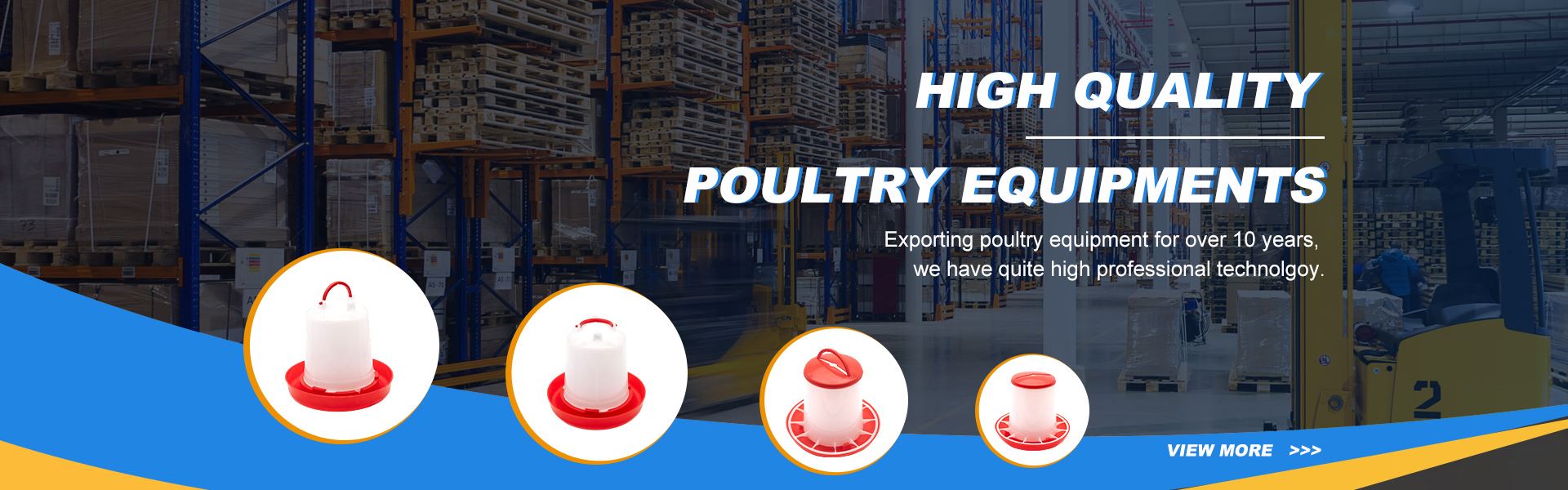
Chicken Feeder
Chicken Feeder is usually a long shaped trough, fixed to the floor of the chicken coop or coop. The chicks can peck at the feed directly in the trough. This kind of feeder is simple and economical, but it needs to be cleaned and fed regularly, otherwise it is easy to contaminate the feed.
Advantages of Chicken Feeder
Keeps Food Safe
Chicken feeders provide a safety net around the feed. Most pests like mice find it difficult to access the food when it is kept in hanging feeders or treadles.
Keeps Food Clean
Chicken feeders are carefully constructed to keep the elements away from the food. They minimize the damage from unpredictable weather and keep the food dry and germ-free.
Prevents Wastage
There is a higher chance of food wastage when you feed the chicks by hand then by feeders. Chicken feeders provide less spillage, they keep the supply regulated, and they restrict food fights.
-
![1.5kg Chicken Feeder]() 1.5kg Chicken FeederThis feeder is usually a long shaped trough, fixed to the floor of the chicken coop or coop. The chicks can peck at the feed directly in the trough. This kind of feeder is simple and economical,...read more
1.5kg Chicken FeederThis feeder is usually a long shaped trough, fixed to the floor of the chicken coop or coop. The chicks can peck at the feed directly in the trough. This kind of feeder is simple and economical,...read more -
![2.5kg Chicken Feeder]() 2.5kg Chicken FeederPlastic feeders are an important piece of equipment for raising poultry.read more
2.5kg Chicken FeederPlastic feeders are an important piece of equipment for raising poultry.read more -
![5kg Chicken Feeder]() 5kg Chicken FeederThrough the automatic control system, the poultry feeder can provide feed for poultry regularly and quantitatively, saving the labor intensity of artificial feeding.read more
5kg Chicken FeederThrough the automatic control system, the poultry feeder can provide feed for poultry regularly and quantitatively, saving the labor intensity of artificial feeding.read more -
![8kg Chicken Feeder]() 8kg Chicken FeederThe chick feeder is made of brand new polypropylene PP material, and the connected feeding bucket is a snap on type. 8kg chicken feeder adopts a bucket net integrated design and can be equipped...read more
8kg Chicken FeederThe chick feeder is made of brand new polypropylene PP material, and the connected feeding bucket is a snap on type. 8kg chicken feeder adopts a bucket net integrated design and can be equipped...read more -
![10kg Chicken Feeder]() 10kg Chicken FeederPoultry feeding bucket is an automatic feeding device, usually composed of cylindrical containers and feeding devices. In the breeding industry, feed buckets are widely used, which can effectively...read more
10kg Chicken FeederPoultry feeding bucket is an automatic feeding device, usually composed of cylindrical containers and feeding devices. In the breeding industry, feed buckets are widely used, which can effectively...read more


Why Choose Us
Experienced Team
Our team of engineers and technicians has years of experience in the industry, and we leverage that expertise to provide our clients with the best possible solutions.
Quality Assurance
We have 100% quality guarantee to customers. We will be responsible for any quality problem.
24H Online Service
We try and respond to all concerns within 24 hours and our teams are always at your disposal in case of any emergencies.
Competitive Price
We have professional sourcing team and cost accounting team, stive to reduce cost and profit and provide you a good price.
Sustainable Development
Establish a good reputation and brand value in the industry, and promote the sustainable, stable, rapid and healthy development of the enterprise.
One stop solution
From the begining inquiry and throughout the entire process until you receive the goods. we are dedicated to supporting you every step of the way.
The purpose of a chicken feeder is to ensure that chickens can access their food easily and safely. It allows chickens to eat, drink, forage, and dust-bathe in the safest environment possible, free from pests and predators.
A chicken feeder typically comes with a rooftop cover that shields them from the elements and also from hungry scavengers looking for an easy meal. Chickens need specialized diets specifically tailored to their lifestyle, so having a feeder helps reduce waste while providing them with the nutrition they need. It keeps them occupied which helps reduce stress levels while keeping roosters away from fighting over food.
The right size of feeder can help prevent overcrowding around the food source and ensure that all chickens have enough to eat.
Some factors to consider when a Chicken Feeder are:
Ease Of Filling: This is one of the factors to consider when choosing a chicken feeder. Feeders should be easy to fill with feed and water. Chickens should be able to easily access feed and water from the feeder. The feeder should ensure that the poultry farmer can easily fill it with water and feed for the birds to eat.
Avoid Waste: Chicken Feeder should be constructed to avoid wastage of feed. The feeder should not be too light so that chickens do not step on the feeder or the feed is poured out when crowded to obtain food. The feeder should be able to withstand the stress of the birds without causing feed waste.
Avoid Feeders That Are Too Deep Or Too Shallow: Chicken Feeder used to raise chickens should not be too deep or too shallow. A chicken feeder that is too deep will prevent the chickens from getting feed from the feeder, while a feeder that is too shallow will result in feed waste. Recommended depths for chicken feeders are: 7 cm for chick feeders, 11 cm for feeders and 12 -15 cm for layers. This specification is considered most suitable for the construction of chicken feeders.
Durability: A Chicken Feeder should be durable, durability will ensure long term use of the chicken feeder thereby getting high returns from the investment in poultry farming.
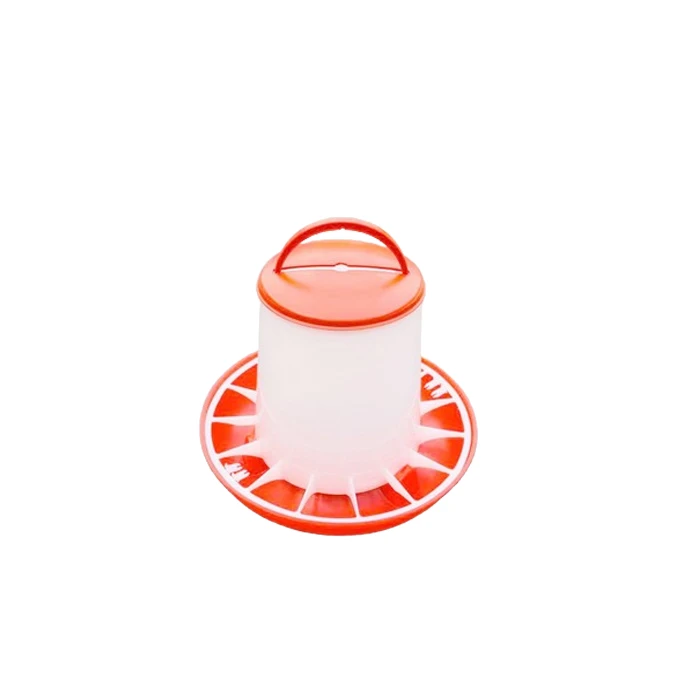
A chicken feeder should be filled with a specific type of feed. Depending on your choice of feed and chickens, this feed should be bought from a pet or agricultural store.
The most common type is layer pellet or crumb feed - it's designed to provide all the necessary vitamins, minerals, and nutrients that laying hens need. If you are raising backyard chickens for eggs or meat, then you will need to choose a different type of feed. For meat birds, unmedicated starter-grower feed should be used until they reach 8 weeks old. After that point, switch them over to a finisher ratio.
Feed must remain free-flowing; make sure to regularly check the level in the bucket and refill when needed as dampness will cause clumping and spoilage of the feed.
Treadle Chicken Feeder
The treadle feeder is a great innovation whereby a chicken stands on it to lift open the device's lid for the chicks to feed. The invention helps prevent rats and mice from getting into the chicken feed, contaminating them. Besides, it reduces food wastage, thus saving money.
Suspendable Chicken Feeder
This feeder is the most famous type of feeder, whereby you tie it to the coop's roof and leave it hanging at some height of the neck of the chicken. Hanging the feeder helps prevent your feathered friend from scratching and pulling the chicken feeder, knocking it down.
And since it's some height of the feathered flock's neck, it will feed with delight and ease. When getting a suspendable chicken feeder, ensure that it has a rubber tray rather than an aluminum or metal tray that may rust.
Tubular Chicken Feeder
A tubular chicken feeder is made from new plumbing or piping. Most of them are large enough to run along all sides of your coop. It has an outward turn spout which protects feeds from going loose and inhibits the hens from scratching the meals. They hold a lot of feeds and are the most uncomplicated yet most streamlined feeders you can ever see.
Now that you have gathered all the materials, let's dive into the step-by-step process of building your chicken feeder.
Measure And Cut The PVC Pipes: If you are making a PVC pipe feeder, start by measuring and cutting the pipes to the desired length using a hacksaw or PVC cutter. Ensure that the pipes are cut at an angle to allow the feed to flow smoothly.
Assemble The PVC Pipes: Use PVC elbows and connectors to assemble the pipes into the desired shape. Apply PVC cement to securely attach the pieces.
Drill holes: Drill small holes into the bottom of the PVC pipes to allow the feed to dispense. Make sure the holes are evenly spaced and not too large to prevent the feed from overflowing.
Hang Or Mount The Feeder: Depending on the design of your feeder, you can either hang it from a sturdy structure or mount it on a wall or fence. Ensure that it is at a comfortable height for your chickens to access the feed.
Test And Adjust: Fill the feeder with chicken feed and observe how it dispenses. Make any necessary adjustments to ensure that the feed flows smoothly and is easily accessible to your chickens.
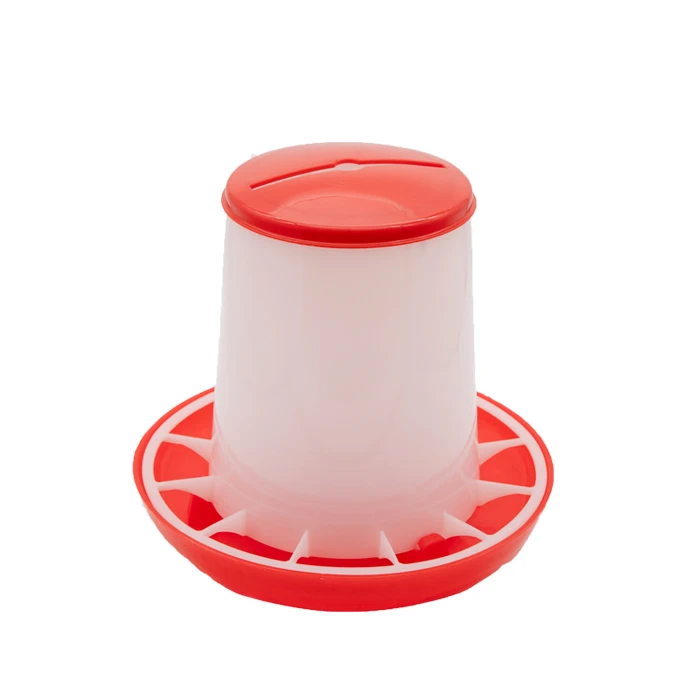
The robust and convenient design of feeders ensures that the chickens are able to access and eat their feed easily, without toppling over the feeder by any type of poking or pushing. Your chickens can have food to their heart's content, while you can rest assured that they won't be creating any food spillage and mess in the process.
Now that you know why you need chicken feeders, let's see how you can buy the right ones for your farm. Selecting feeders needs consideration of many factors, some of which are explained below:
Number Of Chickens On Your Farm
How many chickens do you have on your farm and how much food they eat on a daily basis? The feed amount for an average laying hen is at least about 1/4 pound every day. Make sure that you buy enough feeders that can contain the average, or a little more than average, feed amount for all the birds. Keep in mind that if your hens are not receiving their desired feed intake, they might stop egg production.
Ease Of Handling And Cleaning
Feeders will need to be cleaned regularly to prevent them from getting dirty or infected. Choosing chicken feeders that have a rather simple construction design are going to be relatively easy to clean on a regular basis. Also see if the feeders are easy to move around the farm if need be.
Type Of Feed You Provide
Feeds for chicken vary greatly. There are dry grains, pelletised feed, mashed or crumbled feed and so on. You should buy a feeder that efficiently delivers the specific type of feed that you tend to give to your chickens. For example, you don't want the feed to get stuck in the crevices of the feeder or cause blockages of any kind in the feeder. The feed should be accessible in entirety to the chickens and that too easily.
Time Available At Your Hand
Do you plan to refill the feeder in every few hours, in every 24 hours or once in a couple of days? Depending on your schedule, this may vary. So choose a feeder of appropriate size, that can hold sufficient feed to last throughout the time before your next refill.
Chicken Feeder and Drinkers Market Outlook
A consistent CAGR of 4% is predicted for the sector by 2033. According to FMI, the revenue share of the chicken feeders and drinkers market is anticipated to increase from US$ 3,573 million in 2023 to US$ 5,289 million by 2033. The chicken feeders and drinkers businesses are likely to grow 1.48x between 2023 and 2033.
The growing desire of farm owners to systematize processes is a key factor projected to support the demand for chicken feeders and drinkers. To provide better feed management and quality, poultry farmers are choosing those feeders and drinkers that are affordable and efficient.
Automated Chicken Feeders and Drinkers: Potential Business Opportunities
The automation of chicken feeders and drinkers has been made possible by a number of technical developments in the poultry sector. The market share for chicken feeders and drinkers is anticipated to rise due to the increasing attention being paid to animal welfare.
The market for poultry feeders and drinkers is moving toward automation. Due to its capacity to increase productivity and save costs, automated feeders and drinkers are becoming popular.
As this equipment improves feed delivery accuracy and lower labor costs, sales of chicken feeders and drinkers are booked. The system can collect data on feed intake that can be used by farmers to spot possible flock health issues.
Adoption of automated feeders and drinkers reaching new heights as they offer a feed with greater consistency, enhancing animal health and development efficiency.
Automated feeders and drinkers' employment can further aid in lowering the chance of cross-contamination, which lowers the possibility of diseases spreading through contaminated feed.
How To Maintain Chicken Feeder
Here Are a Few Tips And Tricks To Help You Keep Your Feeder In Top Condition:
Regular Cleaning
Clean your feeder regularly to prevent the build-up of mold, bacteria, and pests. Remove any leftover feed and wash the feeder with mild soap and water. Ensure it is completely dry before refilling.
01
Protect From The Elements
If your feeder is exposed to the elements, consider adding a cover or shelter to protect it from rain, snow, and direct sunlight. This will help prolong its lifespan.
02
Monitor Feed Levels
Keep an eye on the feed levels and refill as needed. This will ensure that your chickens always have access to fresh feed.
03
Adjust Feeding Height
If you notice that your chickens are struggling to reach the feed or if there is excessive wastage, adjust the height of the feeder to a more comfortable level.
04
Optimize Feed Flow
Experiment with the size and number of holes in your feeder to optimize the feed flow. This will help prevent clogging and ensure a steady supply of feed.
05
Certifications


Nanchang Huibing Electronics Co., Ltd. was established in 2018 as a company focusing on the production of high-quality egg incubators and other poultry equipment, providing quality services and technical support. The company's products have been highly recognized by our customers and have a wide range of application fields. Since 2018, our company has its own factory located in Dezhou, Shandong, with a total area of more than 15,000 square meters, and a number of companies to reach strategic cooperation, long-term maintenance of stable supply capacity.
FAQ
We're professional chicken feeder manufacturers and suppliers in China, specialized in providing high quality customized service. We warmly welcome you to buy discount chicken feeder in stock here from our factory. Contact us for quotation and free sample.
professional incubators, 4 Levels 2 Doors Chicken Broiler Cage, 1056 Eggs Electric Incubator